
WE SHIP WORLDWIDE
Orthopedics & Supports Guide - Braces, Sleeves, and Support Solutions
A practical guide for active people who want to choose the right brace, sleeve, or support without guessing
If you play sports regularly, there is a good chance you have thought about buying some kind of support at least once. Maybe your ankle keeps rolling after an old sprain. Maybe your knee starts complaining after runs, games, or leg day. Maybe your wrist feels irritated after tennis or weight training. At that point, most people start searching for a brace, sleeve, or strap and quickly realize there are far too many options.
That is usually where the confusion starts. One product says it is for support. Another promises stability. Another talks about compression, while another looks bulkier and more “professional,” so it feels like it must be better. But orthopedic supports only help when they match the problem. A soft sleeve will not do much for a truly unstable joint. A rigid brace may be too much for mild swelling. And a tendon strap is a very different tool from a general brace.
I am writing this from the perspective of a sports physiotherapist who has worked with athletes in soccer, basketball, tennis, track, and volleyball. Across all of those sports, one thing stays the same: the best results come when people understand what they are buying and why they are using it. If you are looking through Orthopedics & Supports and trying to decide what is actually worth buying, this guide will help you make a smarter choice.
We will go through the main types of braces, sleeves, straps, and supports, talk about what tends to help before an injury, what usually makes more sense after an injury, and match common sports problems with the kind of support that is usually most useful.
Why athletes use supports in the first place
Sports put the body under repeated stress. Sprinting, landing, changing direction, serving, jumping, kicking, and absorbing contact all load the joints and soft tissues again and again. That does not automatically mean you need a support, but it does explain why so many athletes use them at some point.
In real life, people usually buy braces or sleeves for one of a few simple reasons. They want to feel more secure after an old injury. They want to calm down an area that gets sore during training. They want a little compression around a swollen joint. Or they are returning to sport and want some extra confidence while their strength and timing catch up.
That is where supports can be helpful. They can add compression, improve body awareness, reduce irritation, limit certain risky movements, and make the return to training feel less intimidating. What they cannot do is replace rehab, strength work, good warm-ups, or sensible training load. A brace can help, but it should be part of the plan, not the whole plan.
The main types of supports and what they actually do
Before talking about injuries, it helps to clear up one of the biggest mistakes shoppers make: assuming all supports do roughly the same thing. They do not.
Compression sleeves
Compression sleeves are the lightest option in most cases. They are soft, flexible, and mainly there to give gentle compression, warmth, and a feeling of support. They are popular because they are comfortable and easy to wear during activity.
Usually best for: mild swelling, light soreness, calf tightness, mild knee irritation, and general comfort during training.
Straps and bands
These are smaller and more targeted. Instead of wrapping the whole joint, they apply pressure in a specific area, often around a tendon. They are commonly used when the issue is not instability, but overload in a tendon that gets irritated during sport.
Usually best for: patellar tendon pain, tennis elbow, golfer's elbow, and some repetitive overuse problems.
Wraps and elastic braces
These sit somewhere between a sleeve and a more structured brace. They usually give adjustable compression and a bit more support than a simple sleeve, but they still allow fairly normal movement.
Usually best for: mild to moderate sprains, irritated joints, post-training swelling, and early return to activity.
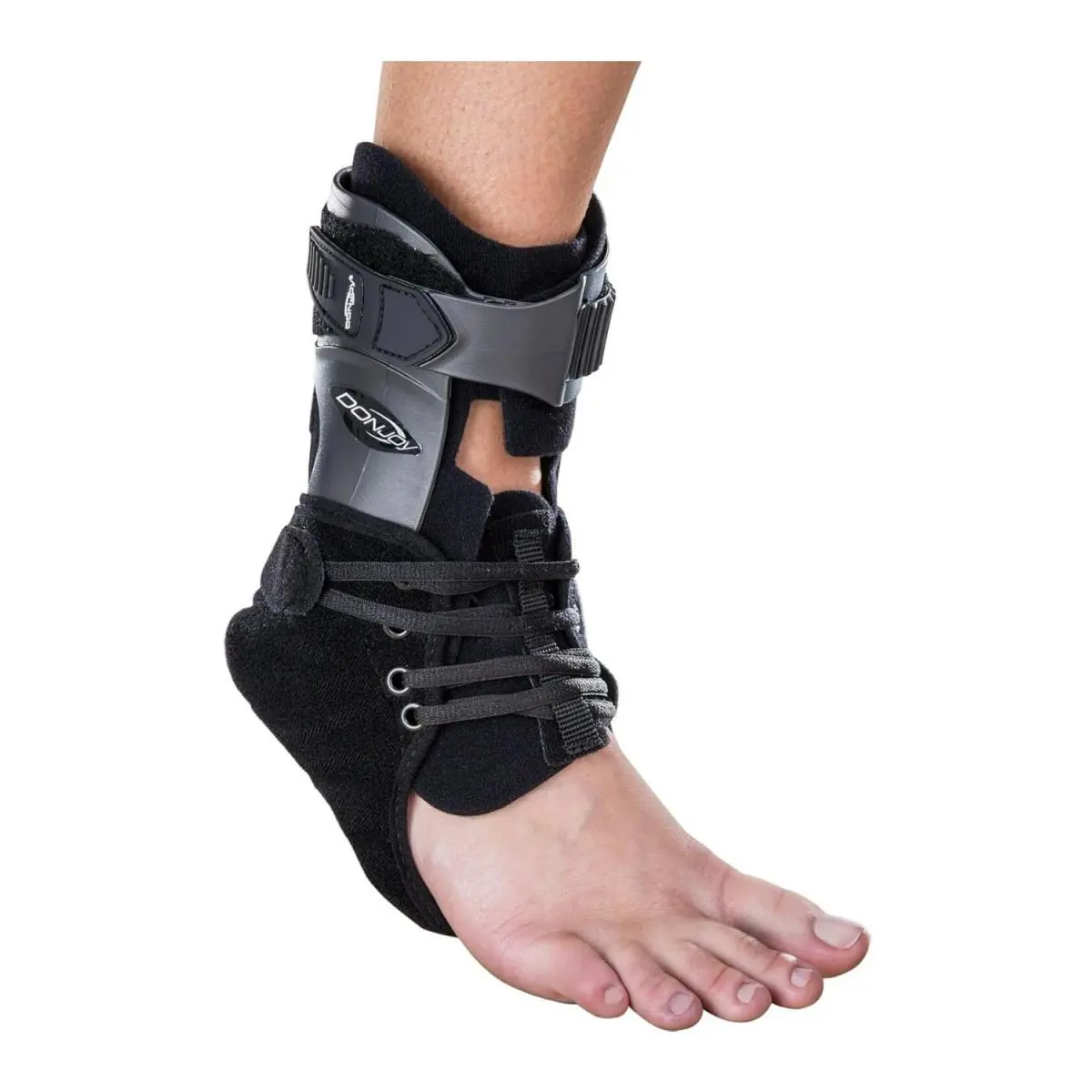
Lace-up or semi-rigid braces
These are more serious support tools. They are designed to control movement more clearly, especially side-to-side motion. This is why they are so common in sports like basketball, volleyball, tennis, and soccer, where cutting and landing create a lot of ankle stress.
Usually best for: ankle instability, return to sport after a ligament sprain, and situations where a sleeve just does not feel supportive enough.
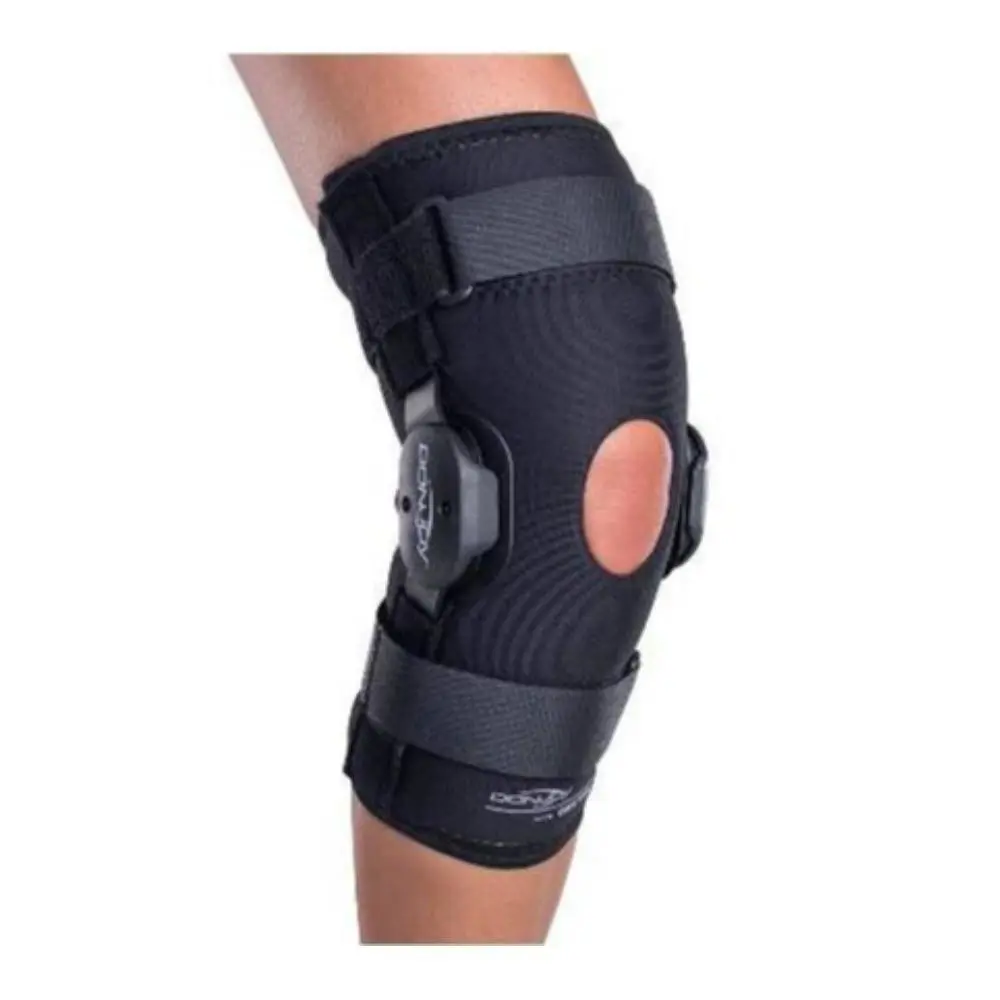
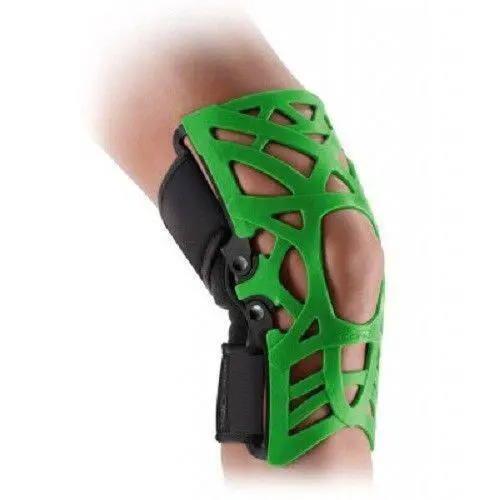
Hinged braces
Hinged braces are more structured again, especially around the knee. They let you bend and straighten the joint, but they help control unstable directions that can be a problem after a ligament injury.
Usually best for: MCL injuries, more significant knee instability, and later-stage return to play after knee rehab.
Rigid splints and immobilizing supports
These are not about comfort. They are about protection. When the goal is to limit motion because a structure needs to calm down or heal, this is the category people are usually looking at.
Usually best for: thumb sprains, some wrist injuries, and cases where movement needs to be restricted rather than encouraged.
What is worth using before an injury happens?
This is one of the most common questions in sport. Should you wear a support before you are injured, just in case? For most healthy joints, not really. If you have no symptoms, no instability, and no injury history, the best prevention tools are still strength, balance, mobility, decent technique, and smart training load. Putting a brace on a healthy joint does not automatically make you safer.
That said, there are a few situations where support before a flare-up or before re-injury makes sense.
Ankle support for athletes with a history of sprains
If you play basketball, volleyball, soccer, or tennis and you have rolled your ankle before, you are not imagining it when it feels vulnerable. An ankle that has been sprained can stay a bit unreliable, especially during quick cuts, awkward landings, or tired late-game moments. In those cases, a more structured ankle brace is often a smart choice.
Usually best before training or matches: lace-up ankle brace or semi-rigid ankle brace.
Usually not enough: a thin ankle sleeve when the main issue is real instability rather than simple swelling.
Knee sleeve for mild irritation
Some runners and court-sport athletes like a knee sleeve when the knee feels a bit irritated but not unstable. It is not fixing the root cause, but it can make the knee feel warmer, more supported, and less annoying during activity.
Usually best before activity: compression knee sleeve.
Wrist support for repeated strain
In tennis, volleyball, or weight training, the wrist can get irritated from repeated loading long before there is a major injury. In that situation, a light wrap or supportive wrist brace can be useful when you want a little help without fully restricting movement.
Usually best before activity: elastic wrist wrap or light wrist brace.
What usually works better after an injury?
After an injury, support choice matters more, because now you are not just chasing comfort. You may be dealing with swelling, irritation, weakness, or actual instability. This is where buying the wrong type of support becomes frustrating. The product can feel fine when you first put it on, but still not give you what you actually need.
Ankle sprains
For a mild ankle sprain, where the joint is sore and maybe a little swollen but you are not feeling that dramatic “giving way” sensation, a compression sleeve or elastic wrap is often enough early on. It can help with comfort, mild swelling, and getting back into shoes and day-to-day movement more comfortably.
For a more moderate ankle sprain, or when you are starting to return to sport and still do not trust the ankle, a lace-up or semi-rigid brace usually makes much more sense. This is especially true in sports with lots of jumping, cutting, and quick direction changes.
Best fit by situation: compression sleeve for light swelling and soreness, lace-up brace for return to sport, semi-rigid brace for athletes who need clearer stability.
Knee pain and knee injuries
Knee supports are one of the biggest areas of confusion, because people often buy one just because the knee hurts, without asking what kind of knee problem they actually have.
For jumper's knee or patellar tendon pain, which is common in volleyball, basketball, and track athletes, a patellar tendon strap is often the most useful starting point. It can make jumping, training, and matches feel more tolerable by changing the way force goes through the tendon. Some athletes also like combining that with a compression sleeve for general comfort.
For more general front knee pain, especially the kind that flares with stairs, squats, or running, a compression knee sleeve is often enough if the knee is not unstable. It gives warmth, light compression, and often a better sense of support.
For an MCL sprain or a knee that feels unstable side to side, that is where a soft sleeve usually is not enough. A hinged brace is often a much better option because it provides actual structure rather than just compression.
Best fit by situation: patellar strap for tendon-related pain, compression sleeve for mild pain and swelling, hinged brace for ligament instability.
Calf strain, shin pain, and heavy lower legs
Runners, soccer players, and track athletes often reach for calf sleeves, and in many cases that makes sense. A calf compression sleeve is not a rigid support, but it can make a strained or overloaded lower leg feel more supported during the return to training. It is also popular for that heavy, tired feeling after hard sessions.
For early shin splint symptoms or general lower-leg overload, compression sleeves can be a useful comfort tool, but they are rarely the main answer. Footwear, running volume, recovery, and calf strength matter more in the long run.
Best fit by situation: calf sleeve or shin sleeve for comfort and gradual return to activity.
Achilles irritation
This is another area where people sometimes buy the wrong thing. If the problem is really the Achilles tendon, an ankle brace may not solve much unless comfort is the main goal. A light sleeve can feel good, but Achilles issues usually respond better to load management, calf work, and sometimes small temporary changes such as heel lift strategies.
Best fit by situation: light compression ankle sleeve for comfort, but not as a replacement for proper tendon rehab.
Wrist, thumb, and hand injuries
For a minor wrist sprain, a supportive wrist brace is usually more useful than a simple wrap because it controls painful movement better. If the injury involves the thumb, that becomes more specific. A basic wrist brace often leaves the thumb too free, which is why a thumb spica support is usually the better buy for a thumb sprain.
Best fit by situation: moderate wrist brace for sprain, thumb spica support for thumb injuries.
Elbow tendon pain
Tennis elbow and golfer's elbow are classic overuse problems. In both cases, a counterforce elbow strap can help some athletes continue playing or training more comfortably, especially in racket sports, gym work, or repeated gripping tasks.
Best fit by situation: elbow strap or forearm band.
Shoulder irritation
Shoulder supports are a bit different. They can help with warmth, comfort, and confidence, but they are not magic stabilizers. A compression shoulder support may feel good during return to training, but if the shoulder is truly unstable, that usually needs a more specific rehab approach.
Best fit by situation: compression shoulder support for mild irritation and return to activity, more specialized support only when clearly needed.
Before injury vs after injury: the easiest way to think about it
If you want one simple rule, here it is:
- Before injury or for prevention: go lighter. Compression sleeves, light wraps, and targeted straps are usually enough unless you have a real history of instability.
- After injury: match the support to the tissue and the problem. Swelling and mild pain usually point toward compression. Tendon overload often points toward a strap. Instability usually points toward a more structured brace.
Put another way, before injury you are mostly trying to manage risk or irritation. After injury you are trying to protect healing tissue and make movement safer while you regain strength and confidence.
Quick guide: what support fits which problem?
| Injury or problem | Best type of support | When it tends to help most |
|---|---|---|
| Mild ankle sprain | Compression ankle sleeve or elastic wrap | When swelling and soreness are the main issues |
| Moderate ankle sprain or instability | Lace-up or semi-rigid ankle brace | During return to sport, especially jumping and cutting sports |
| Jumper's knee or patellar tendon pain | Patellar tendon strap | During training and matches when tendon load is the problem |
| Mild front knee pain | Compression knee sleeve | For warmth, mild swelling, and general support |
| MCL sprain or knee instability | Hinged knee brace | When the knee needs more structure, not just compression |
| Calf tightness or minor calf strain | Calf compression sleeve | During gradual return to running and field work |
| Shin discomfort or early shin splints | Calf or shin compression sleeve | For comfort during activity, alongside load adjustment |
| Achilles irritation | Compression ankle sleeve | As a comfort tool while managing tendon load properly |
| Minor wrist sprain | Moderate wrist brace | When movement needs some control and protection |
| Thumb sprain | Thumb spica support | When the thumb itself needs to be restricted |
| Tennis elbow or golfer's elbow | Counterforce elbow strap | During racket sports, lifting, or repetitive gripping |
| Mild shoulder irritation | Compression shoulder support | For comfort and confidence during return to training |
How to choose the right support without overbuying
If you are shopping for a brace, sleeve, or support, it helps to slow down and ask a few basic questions before adding something to your cart.
- Is the main issue pain, swelling, overload, or instability? These feel similar to many people, but they are not the same thing.
- Is this more likely a tendon problem or a ligament problem? Tendon pain often responds to targeted straps or load management. Ligament issues usually need more stability.
- Will you wear it for sport, for daily life, or both? A support that feels fine for walking may not feel secure enough during training.
- Are you early after injury or almost back to full sport? Early on you may need more protection. Later on you may only need light support.
- Does it actually fit? The best support is one that stays in place, feels secure, and does not create a new problem while trying to solve the old one.
One more thing that is worth saying clearly: tighter is not always better. A lot of people buy the stiffest, tightest-looking brace because they assume more support must be better. Sometimes it is. Often it is simply more than they need. The goal is not to feel locked down. The goal is to feel appropriately supported for the issue you have.
Final thoughts
The right orthopedic support can be genuinely useful, especially when it helps you train more comfortably, return to sport with more confidence, or protect an area that is not quite ready to be left alone yet. But the best choice is rarely the fanciest one. It is the one that matches your sport, your symptoms, and your stage of recovery.
If your issue is mild swelling or general irritation, compression may be enough. If the problem is instability, look for more structure. If the issue is tendon overload, a targeted strap often makes more sense than a bulky brace. And if you are browsing Orthopedics & Supports because you want something that will actually help, the smartest move is to buy with a clear purpose instead of guessing based on appearance alone.
That is usually the difference between a support that ends up forgotten in a drawer and one that becomes a genuinely useful part of training, recovery, and return to play.
FAQ: Orthopedics & Supports Guide
What is the difference between a brace, a sleeve, and a strap?
A sleeve is mainly for compression and comfort, a brace gives more structure and stability, and a strap is usually meant to take stress off a tendon or a very specific painful area.
What is the best support for an ankle sprain in sports?
If it is mostly mild swelling and soreness, a compression sleeve can help. If the ankle feels unstable or you are going back to sports like basketball, soccer, tennis, or volleyball, a lace-up or semi-rigid brace is usually the better choice.
What support is good for jumper's knee or patellar tendon pain?
A patellar tendon strap is often a good option because it can make tendon-related pain feel more manageable during training. Some athletes also like wearing a compression knee sleeve for extra comfort.
Should athletes wear orthopedic supports before they get injured?
Not always. If the joint is healthy and there is no injury history, most people are better off focusing on strength, balance, mobility, and good training habits. Supports make more sense when there is old instability, recurring overload, or a clear reason for extra support.
How do I choose the right orthopedic support for sports?
Start with the main issue. If it is swelling or mild pain, compression may be enough. If it is tendon overload, a strap might be more useful. If it is real instability, you will usually need a more structured brace.